


SaaS Marketing Agency for Startups

When founders ask me which marketing agency they should hire, my honest answer is usually a different question: what stage are you actually at? Hiring an agency before $300K ARR rarely works. Hiring the wrong one at $2M ARR can cost a year of runway.


Median B2B SaaS CAC payback stretched to 20 months in 2025, up from 15 months in 2022 First Page Sage, 2025. The math has tightened. The wrong agency burns cash you don’t have. The right one, picked at the right moment, can shorten payback by 6-9 months.


This is the buyer’s framework I give SaaS founders before they sign anything: what makes SaaS marketing different, when an agency fits, what to pay, how to evaluate, and the metrics that prove it’s working.

Key Takeaways

  • Top quartile SaaS teams now attribute 41% of qualified pipeline to organic search and answer engines (First Page Sage, 2026); paid share fell from 34% to 26% in three years.
  • Median agency retainers run $5,000-$20,000/month; a four-person in-house team costs $450K-$550K/year fully loaded.
  • Expect 9-12 months for SaaS organic to become predictable revenue. Question any agency that promises faster.
  • Retainer agencies retain clients 56 months on average versus 24 for project shops engagement model predicts results.

Why is SaaS marketing different from marketing other businesses?

The average B2B SaaS deal now involves 6.8 stakeholders up from 5.4 in 2020 and the median sales cycle has lengthened to 84 days (Gradient Works, 2025). SaaS marketing isn’t about persuading one buyer in a single moment. It’s about staying useful across a multi-month evaluation where six people quietly compare you against alternatives.


That changes what marketing has to produce.


Generic agencies treat marketing as awareness plus lead generation. SaaS marketing has to do four things at once: educate a non-buyer who’ll become a buyer in nine months, hand sales the right context when an evaluation starts, defend against churn in months three through twelve, and surface in answer engines when a CFO types “[your category] vs [competitor]” into ChatGPT.


The retention dimension is what most generalist agencies miss entirely. A SaaS customer signed today is often unprofitable for the first 15 months meaning marketing’s job doesn’t end at signature. Content has to keep onboarding customers, prevent rage-churn at the renewal cliff, and surface expansion opportunities. Few agencies even know to ask about retention metrics during a sales pitch.


Then there’s the AI Overviews shift. Organic CTR for informational queries with AI Overviews dropped 61% between mid-2024 and late 2025 (Seer Interactive, 2025). Comparison queries the bottom-of-funnel goldmine for SaaS are now mediated through AI summaries. Being cited in an AI Overview generates 35% more organic clicks and 91% more paid clicks than non-cited results. SaaS marketing in 2026 means writing for an audience that increasingly never visits your site.


Our take: the biggest marketing risk for SaaS founders in 2026 isn’t picking the wrong channel it’s picking an agency that treats SaaS the same as e-commerce or local service businesses. The motion is fundamentally different.

B2B SaaS Pipeline Attribution by Channel (2026) Organic + content + AEO - 41% Paid acquisition - 26% Outbound / SDR - 16% Events + community - 11% Other - 6%
Source: First Page Sage, SaaS Marketing Channels Compared 2026.

For a deeper breakdown of how channel mix should shift by ARR stage, see our What Is SaaS SEO? A 2026 Guide for B2B Founders.

When should a SaaS startup actually hire a marketing agency?

The honest answer: not at $0 ARR, and rarely at $20M ARR. Most SaaS startups get the most agency leverage between roughly $300K and $5M in ARR after product-market fit signals are real but before the company can afford a four-person in-house marketing team SaaS Capital, 2025.
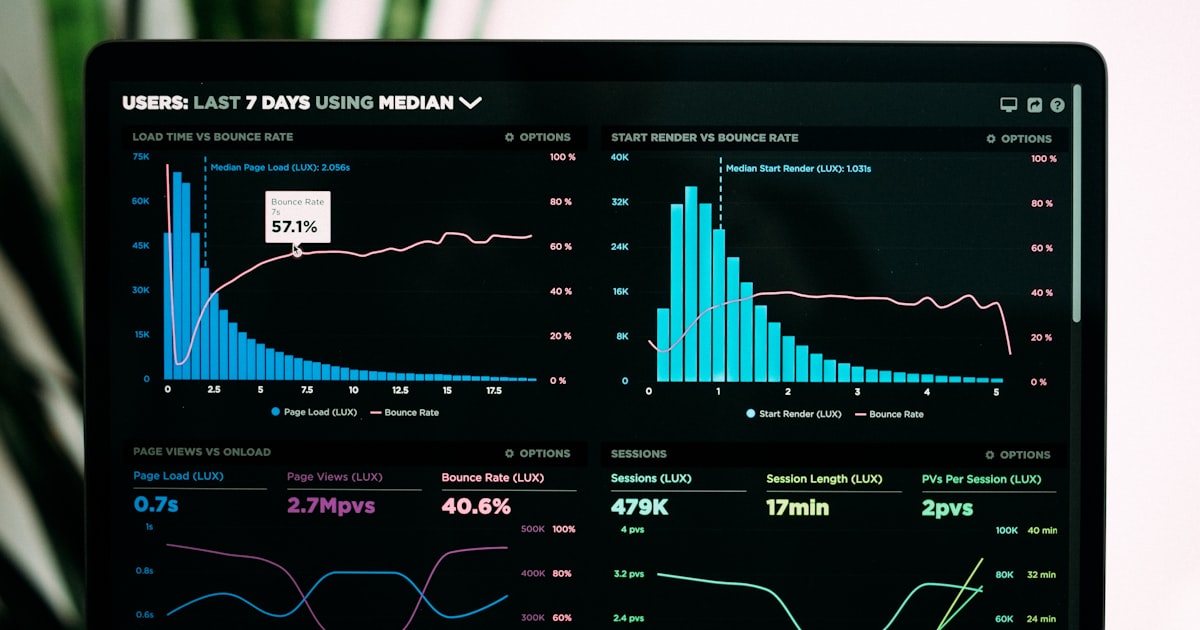
Performance analytics graphs on a laptop screen, showing the kind of pipeline reporting SaaS founders use to evaluate marketing agency performance.

Pre-PMF (under $200K ARR). Don’t hire an agency. Founders should be doing customer interviews and writing the first 20 blog posts themselves. An agency at this stage builds infrastructure for a story that hasn’t been validated yet. You’ll pay for content that doesn’t compound and SEO for keywords that turn out to be wrong.


$200K-$1M ARR. This is fractional territory. A fractional CMO at $4,000-$8,000/month, plus a content/SEO contractor, beats a full-scope agency at this stage. You need someone who can write the first version of your category narrative, and that’s hard to outsource to a 10-person agency where you’ll be account number 47.


$1M-$5M ARR. The agency sweet spot. You have enough revenue to fund $10,000-$20,000/month, enough customer data to brief an agency properly, and enough volume that compounding starts to matter. The cost math beats hiring: a four-person in-house marketing team runs $450,000-$550,000 fully loaded in 2025 Marketerhire, 2025, plus 6-8 months to actually staff. An agency deploys in three weeks.


$5M-$20M ARR. Hybrid model. Start hiring in-house for the things that compound with company-specific knowledge content strategy, lifecycle, product marketing and keep the agency for technical SEO, paid media, and link building where craft beats context.


$20M+ ARR. Mostly in-house, with specialist agencies for narrow execution like programmatic SEO, comparison page production, and AEO testing.

The real question isn’t “in-house or agency?” It’s “what’s my CAC payback target this year, and which model gets me there fastest?”


A four-person in-house marketing team manager, content lead, paid specialist, ops costs $450,000-$550,000 annually in fully loaded 2025 compensation, and takes 6-8 months to fully staff at industry average hire times of 50 days per role Marketerhire, 2025. The same coverage from a SaaS-specialized agency retainer costs $10,000-$20,000 per month and ships in three weeks.


What services should a SaaS-focused agency actually deliver?

The top channels for B2B SaaS in 2026 are organic search and AEO (41% of qualified pipeline), paid acquisition (26%), and outbound/SDR (16%) First Page Sage, 2026. Any agency that won’t tell you which mix they recommend and why for your specific ICP and ACV is selling you a template, not strategy.


Here’s what should actually be in scope:


SEO with topic-cluster architecture. Not “blog posts.” Pillar pages on category-defining queries, supporting clusters that capture middle-funnel intent, and the internal linking discipline to compound authority. If the agency can’t show you a cluster map for your top three pillars in week one, walk.


BOFU comparison and alternatives pages. These are the single highest-ROI assets a SaaS marketer can ship. “[Your product] vs [competitor]” and “[competitor] alternatives” pages rank for high-intent queries that close trial signups. Median CAC from organic SEO is $1,420 per customer versus $4,180 from paid search First Page Sage CAC by Channel, 2026 – most of the gap comes from BOFU content.

Median CAC per Customer by Channel — B2B SaaS (2026) $0 $1.5K $3K $4.5K $6K Organic SEO $1,420 Referral $2,100 Email / owned $2,650 Paid search $4,180 LinkedIn Ads $5,800
Source: First Page Sage CAC by Channel, 2026. Blended median across B2B SaaS clients.

Answer Engine Optimization (AEO). Writing structured, citation-ready passages that get pulled into AI Overviews, ChatGPT, and Perplexity responses. This is a craft, not a checkbox. Agencies that mention “GEO” or “AEO” but can’t show specific citation wins are using buzzwords.


Pipeline attribution stack. If the agency can’t tell you which keyword cluster sourced which closed-won deal, they’re optimizing for traffic instead of revenue. Ask to see their attribution methodology in the discovery call.


Lifecycle and product-led growth integration. For PLG SaaS, the marketing-product handoff is the difference between activation and churn. The agency should be writing for in-product moments, not just blog readers.


What should be out of scope. Social media management. Generic press releases. “Branding” as a primary deliverable. Anything where the agency owns the metric of “impressions.” If it doesn’t tie to pipeline or retention, it isn’t B2B SaaS marketing it’s agency padding.


The biggest red flag I’ve seen in agency briefs over the last two years: scope that lists 15 services. SaaS marketing is more like compound interest than asset diversification. Three things done well beat ten done shallowly, every single time.

How much does a SaaS marketing agency cost in 2026?

Most SaaS marketing agencies charge $5,000-$20,000 per month, with the typical retainer for a $1M-$5M ARR company landing at $8,000-$12,000 TripleDart, 2026. Top-end full-stack engagements run $20,000-$40,000 monthly for multi-channel, full-funnel work with embedded strategy.


But “cost” is only half the question. The right framing is cost relative to CAC payback target.


Pricing models you’ll encounter:

Retainer (monthly fixed fee). The default for SaaS. Predictable cost, predictable deliverables. Average retainer-agency client tenure is 56 months versus 24 for project-based Focus Digital, 2026, so this model also predicts whether you’ll still be working together in two years.


Performance-based. “We get paid on results.” Almost always a red flag for early-stage SaaS the agency needs predictable cash flow to invest in compound channels like SEO. If they take 100% performance pay, they’re either desperate or planning to optimize short-term wins at the expense of long-term assets.


Hybrid (retainer + bonus). Often the cleanest structure. Base retainer covers cost-of-delivery, with an upside tied to pipeline or qualified opportunities sourced.


Equity-for-services. Almost never works for the SaaS founder. You give up 0.5-2% of the company for what would’ve cost $60K-$200K in cash. Run the math: at a $50M exit, that’s $250K-$1M. You’re better off finding the cash.

Monthly Retainer Range by Engagement Scope (USD, 2026) $0 $10K $20K $30K $40K $1-5K Tactical / audit $5-10K Single-channel retainer $10-20K Multi-channel growth $20-40K Full GTM / RevOps
Source: TripleDart 2026 pricing data; SEM Monks composite from 40+ SaaS engagement scopes reviewed Q1 2026.

Hidden costs to budget for:

  • Tools (Ahrefs, Semrush, Clearbit, attribution platform): $1,500-$4,000/month, often not included in retainer
  • Paid media spend (separate from agency fees): $5,000-$50,000/month depending on stage
  • Content production (writers, designers): some agencies bundle, some bill separately at $200-$500 per piece
  • Onboarding fees: $5,000-$15,000 one-time, sometimes waived for 6+ month commitments


The cheapest agency is almost never the best deal. A $3,000/month agency that takes 14 months to break even on pipeline costs you more than a $12,000/month agency that breaks even in 7. For the math behind agency cost versus payback, see how to model marketing investment against payback → SaaS CAC payback math

How do you evaluate a SaaS marketing agency before signing?

Marketing agency client churn averages 32% annually for sub-10-person shops, dropping to 15% at 51+ employee firms (Focus Digital, 2026). One in three engagements fail within a year. Your evaluation has to filter out the bottom third before you sign anything.


Green flags (these mean you’re talking to a real SaaS agency)

  • They ask about your CAC, payback period, and NRR within the first 30 minutes
  • Published case studies include retention numbers, not just MQL counts
  • Their team can name three specific keyword clusters they’d target for your ICP, with rationale
  • They refuse certain work won’t take you on if budget can’t fund 9 months of runway
  • They own the attribution stack, not your marketing analyst
  • They show specific AI Overview / ChatGPT citation wins, not just rankings
  • They have an opinion about category positioning, not just channels


Red flags (walk)

  • “We guarantee first-page rankings in 90 days.” Impossible for competitive SaaS keywords.
  • Case studies all use round-number metrics (300% increase, 10x leads) without absolute baselines
  • They pitch the same scope to every SaaS company regardless of stage or category
  • The account manager you’ll work with isn’t in the pitch
  • They can’t articulate the difference between PLG and sales-led SaaS marketing
  • “Strategy” is a separate paid phase before any execution starts
  • They want a 12-month minimum but won’t commit to any quarterly checkpoints


The 10-question discovery call checklist

  1. What’s your client retention beyond 24 months and can I talk to a client at month 25?
  2. Show me the last three SaaS engagements where you fired the client or got fired. What happened?
  3. How do you attribute a closed-won deal back to a specific content asset?
  4. What percent of your roster has CAC payback under 15 months?
  5. Which AI Overview citations have you earned for clients in the last six months?
  6. Who specifically is writing the content and have they worked in SaaS before?
  7. What does your reporting look like at month 3, month 6, month 9?
  8. What’s your stance on link building and what’s the link profile of your last three clients?
  9. If we kill a low-performing keyword cluster, how fast can you reallocate?
  10. Why is your work better than what I’d build with two strong contractors and a fractional CMO?

Retainer-based marketing agencies maintain client relationships 2.3x longer than project shops 56-month average tenure versus 24 months driven by the compounding nature of retained engagements and the time SaaS channels need to mature Focus Digital agency benchmark, 2026. Ask about retention beyond 24 months in any agency pitch.

What metrics signal an agency is actually working?

Realistic SaaS organic pipeline takes 9-12 months to become predictable revenue, with breakeven on SEO investment around month seven Optimist SaaS SEO Strategy, 2026. Inside that window, you need different metrics at different checkpoints measuring MQLs at month two will make you fire a working agency.

Typical SaaS Organic Pipeline Curve by Month Pipeline contribution indexed to month 12 = 100 Foundation Early signals First MQLs Predictable 0 25 50 75 100 M1 M2 M3 M4 M5 M6 M7 M8 M9 M10 M11 M12
Source: SEM Monks composite curve, calibrated against Optimist and First Page Sage 2026 timeline benchmarks.

Months 0-3 — leading indicators only:

  • Coverage: how many priority keyword clusters have shipped pages
  • Indexation rate and crawl health
  • AI Overview / ChatGPT citation appearances (these can come in weeks)
  • Brand search volume trend (small but directionally important)


Don’t measure pipeline yet. Anyone who promises pipeline in 90 days is gaming you with paid-spend reallocation, not building a compound channel.


Months 3-6 — engagement signals:

  • Impressions and average position for target clusters
  • Trial signups attributable to specific content assets
  • Branded organic queries growth
  • Time-on-page and scroll depth on cornerstone pieces


Months 6-9 — pipeline signals:

  • Marketing-sourced MQLs, with content attribution
  • Demo bookings from comparison / alternative pages
  • Cost-per-MQL trending toward your target


Months 9-12 — revenue signals:

  • Marketing-sourced closed-won
  • CAC payback by channel
  • Customer LTV from organic vs paid (organic customers typically retain 15-30% longer in SaaS)


Red-zone signals at any month:

  • Flat or declining traffic month-over-month after month 6
  • Agency switches the reporting framework without telling you why
  • Drop in branded search (means content quality is hurting brand)
  • Pipeline-sourced from agency work tracks below 0.5x retainer cost by month 9


If you see any red-zone signal twice in a row, schedule a hard conversation. Three months in a row? Switch agencies before you sink another quarter of cash.


Want a second opinion on your SaaS marketing setup?

If you’re trying to figure out whether your current SaaS marketing is on track or whether the agency you’re about to hire fits the framework above book a 30-minute roadmap session with our team. We’ll review your CAC payback target, current channel mix, and three highest-leverage opportunities for the next 90 days. No pitch, no contract. The output is a one-page roadmap you can use even if you decide not to work with us.

Frequently Asked Questions

How long until a SaaS marketing agency delivers ROI?

Plan for 7 months to breakeven and 9-12 months to predictable revenue from organic channels Optimist, 2026). Paid channels can show ROI in 4-8 weeks but with higher CAC. Any agency promising organic pipeline in under 90 days is gaming attribution.


Is it better to hire in-house or use an agency at $1M ARR?

Agency, almost always. A four-person in-house team costs $450K-$550K annually fully loaded Marketerhire, 2025), takes 6-8 months to staff, and burns runway you don’t have. A SaaS-specialized agency at $10K-$15K/month delivers the same scope in three weeks.


What does a typical SaaS marketing agency contract look like?

Six-month minimum, monthly retainer in the $5K-$20K range, with 30-60 day exit clauses after the initial term SEMmonks, 2026. Performance bonuses tied to qualified pipeline are common. Avoid 12-month lockups with no quarterly checkpoints.


Can a generalist B2B agency work for SaaS?

Rarely. Generalist agencies miss the retention dimension, the PLG dynamics, and the AEO craft that SaaS-specific keyword landscapes demand. They’ll deliver MQLs that don’t close because they’re treating SaaS like long-cycle services marketing. Ask any generalist to show three SaaS case studies with retention data before signing

The bottom line

he market for SaaS marketing agencies in 2026 isn’t short on options it’s short on operators who actually understand SaaS economics. Most agencies will pitch you channels. The ones worth hiring will pitch you a CAC payback curve, defend a specific channel mix for your ICP, and tell you what they refuse to do.


The shortlist of questions matters more than the shortlist of vendors. Pick the agency whose answers to the 10 discovery questions above feel like operator reasoning, not pitch deck reasoning. Then give them three months of leading indicators, six months of engagement signals, and nine months before you judge pipeline.


Compound channels reward patience. So does picking the right partner. If you want to see how we structure SaaS engagements, see  how we work with SaaS startups → SEM Monks engagement model.